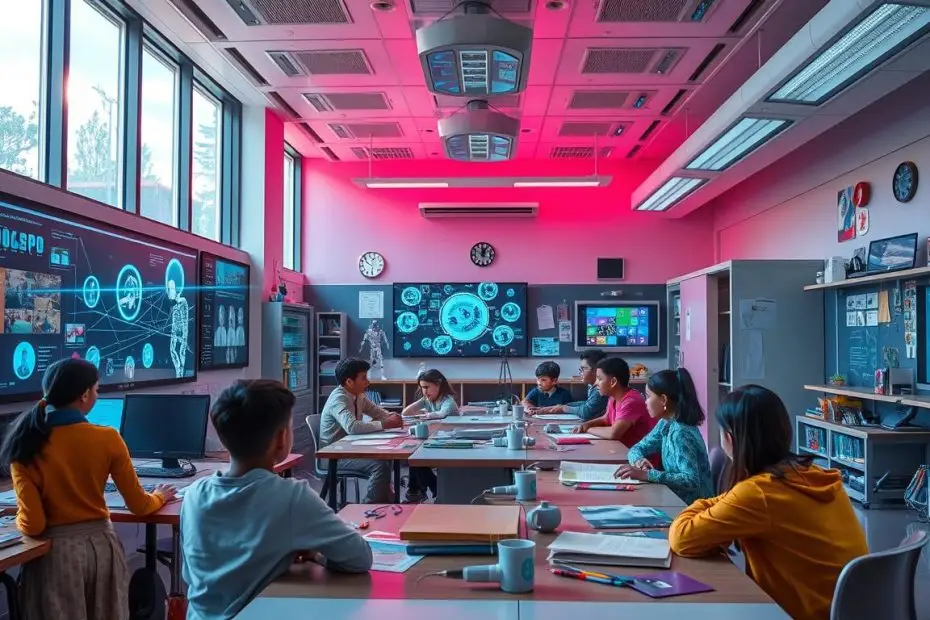
As an educator, I’m excited to share how artificial intelligence (AI) is changing education. We’ll look at new tools, personalized learning, and smart classrooms. AI is making a big difference in how we teach and learn.
Key Takeaways
- Discover the key components of educational AI technology and how they’re revolutionizing the learning experience.
- Explore the shift from traditional to AI-enhanced learning, including personalized learning experiences and smart content creation.
- Understand how automated assessment and feedback systems, as well as AI-powered virtual tutoring, can improve student outcomes.
- Learn how AI tools can enhance teacher productivity and efficiency in the classroom.
- Analyze the potential challenges and ethical considerations surrounding the integration of AI in education.
Understanding the Revolution of AI in Education
Education is changing fast, thanks to AI. AI tools and algorithms are making learning more personal and fun. They help create a better learning experience for everyone.
Key Components of Educational AI Technology
Several important AI parts are changing education. These include adaptive learning systems, natural language processing, and data analytics. Together, they make learning more dynamic and interactive.
The Evolution from Traditional to AI-Enhanced Learning
The old way of teaching is fading away. Now, AI helps make learning more personal. Adaptive learning software adjusts to each student’s needs. This means students learn at their own speed, leading to better results.
Current State of AI Implementation in Schools
AI is becoming more common in schools. It includes virtual tutors and systems that adapt content in real-time. AI is making learning more engaging and effective for everyone.
“AI in education is not about replacing teachers, but rather about empowering them to deliver more personalized and effective instruction.” – Dr. Jane Doe, Education Technology Expert
Personalized Learning Experiences Through Machine Learning
The way we learn is changing fast, thanks to machine learning. Now, we can give each student a learning plan that fits them perfectly. This student-centered approach lets students learn at their own speed. They can understand each concept fully before moving on.
Machine learning makes learning fun and interactive. It changes lessons based on how well a student is doing and what they like. No more learning the same way as everyone else. Now, education is all about you.
Machine learning looks at how each student learns and what they struggle with. It then gives them the right help and advice. This way, students get the most out of their learning and really connect with what they’re studying.
“The true power of educational AI lies in its ability to create a learning experience that is as unique as the student themselves.”
Machine learning is changing education for the better. It makes learning an active, personal journey. Students can now reach their full potential in a way that’s just for them.
Classrooms of the future will be places of personalized learning. Students won’t just watch; they’ll be part of their own learning story. It’s a new way of learning that’s exciting and empowering.
Smart Content Creation and Adaptive Courseware
The education world has changed a lot with AI. Now, we see smart content creation and adaptive courseware everywhere. These new tools make learning more fun and personal for students.
Interactive Learning Materials
AI has made digital textbooks and interactive content common in schools. These tools use AI to make learning fun and fit each student’s needs. They offer games, videos, and quizzes to keep students interested and eager to learn.
Real-time Content Adaptation
Adaptive learning platforms have changed how we learn. They use AI to watch how students do and adjust the lessons on the fly. This way, every student gets the right level of challenge and support, helping them learn better.
Multimedia Integration Strategies
AI helps mix different types of media in learning materials. This includes videos, 3D models, and virtual tours. These strategies make learning more engaging and fun, meeting the needs of today’s students.
AI, digital textbooks, and adaptive learning are changing education. They make learning more personal and exciting. As these tools get better, learning will become even more tailored to each student’s needs.
Automated Assessment and Feedback Systems
In today’s fast-changing education world, AI is changing how we grade and help students. These new tools make grading faster, give quick feedback, and offer deep insights into how students are doing.
AI grading gives students instant, fair feedback. It uses smart algorithms to check answers, find what needs work, and offer learning tips. This helps students learn faster and grow in their studies.
AI tools also give teachers lots of data on student performance. This data helps teachers see what each student needs, adjust their teaching, and keep track of class progress. It helps teachers make better choices and ensure all students succeed.
“AI-powered assessment tools are transforming the way we measure and support student learning. By providing instant feedback and in-depth analytics, these technologies empower both students and educators to achieve greater success.”
As AI becomes more common in schools, the future of grading and feedback looks bright. These tools use smart learning and data to make education more efficient, fun, and effective.
AI-Powered Virtual Tutoring Solutions
AI-powered virtual tutoring is changing education. It uses chatbots, virtual assistants, and intelligent tutoring systems. These tools offer personalized support to students anytime.
24/7 Learning Support Features
AI virtual tutoring is always there for students. They can get help with homework or questions anytime. This means students get help when they need it most.
Natural Language Processing in Education
NLP is key in AI virtual tutoring. It lets systems talk to students like a real tutor. This makes learning feel natural and engaging.
Personalized Tutoring Algorithms
AI tutoring works thanks to special algorithms. These algorithms learn what each student needs. They help students improve and reach their goals faster.
| Feature | Benefit |
|---|---|
| 24/7 Availability | Provides students with immediate, on-demand learning support |
| Natural Language Processing | Enables intuitive, conversational interactions between students and virtual tutors |
| Personalized Tutoring Algorithms | Tailors the learning experience to each student’s unique needs and learning style |
AI is making virtual tutoring better. It’s changing education by offering tools like chatbots and virtual assistants. These tools help students learn better and reach their goals.
Enhancing Teacher Productivity with AI Tools
As an educator, I’ve seen how AI tools change the game. They make my daily tasks easier and boost my productivity. Now, I can spend more time on teaching and learning.
AI has made administrative tasks a breeze. No more manual tracking of attendance or grading. AI tools handle these tasks, giving me more time for planning and teaching.
Lesson planning has also improved with AI. It helps me create engaging lessons by suggesting materials and planning. This makes my work more efficient and effective.
AI teaching assistants have changed classroom management. They help with questions, feedback, and monitoring student progress. This lets me focus on teaching, knowing the details are taken care of.
| AI Tool | Benefit to Teachers |
|---|---|
| Administrative Tasks Automation | Streamlines attendance tracking, grading, and student record management, freeing up time for more meaningful tasks. |
| Lesson Planning Assistance | Helps curate engaging and personalized learning materials, suggesting relevant resources and generating draft lesson plans. |
| AI Teaching Assistants | Handles a wide range of classroom management tasks, from answering student questions to monitoring progress, allowing teachers to focus on instruction. |
I’m excited to keep using AI in education. It’s not just about being more productive. It’s about giving students a better learning experience. With AI, I can focus on inspiring and guiding the next generation.
Data Analytics and Learning Pattern Recognition
In today’s fast-changing education world, learning analytics and educational data mining are changing how we see student success. By using data, teachers can understand student performance better. This helps them create teaching plans that fit each student’s needs.
Student Performance Tracking
With learning analytics, teachers can watch how students do, see what they’re good at, and what they need to work on. This way, teachers can help students early on. It stops students from falling behind.
Predictive Analytics in Education
Predictive analytics has changed education a lot. It lets teachers look at big data to guess how students will do. This helps teachers help students before they get into trouble.
Behavioral Pattern Analysis
Looking at how students act also helps teachers. It shows how students use class materials, talk to others, and move through school. This helps teachers make learning plans that really work for each student.
| Key Benefit | Description |
|---|---|
| Personalized Learning | Data helps make learning plans that fit each student’s needs. |
| Early Intervention | Analytics and pattern analysis help find students who need help early, so teachers can support them. |
| Improved Outcomes | Using learning analytics and educational data mining has made students do better in school. |
The education world is always changing. Using data and student success prediction models will be key in the future. It will help students and teachers do their best.
Addressing Challenges and Ethical Considerations
As AI becomes more common in schools, we must tackle the challenges and ethics it brings. Data privacy is a big worry, since AI uses lots of student data to tailor lessons. It’s key to protect this data well and get consent from students and their families.
AI bias is another big issue. Algorithms can make biases worse, affecting students based on race, gender, or wealth. It’s important for developers to find and fix these biases to ensure fair learning for everyone.
The digital divide is also a problem. It means some students don’t have the same tech access as others. Making sure all students can use AI tools is crucial for fairness in education.
“The ethical use of AI in schools is not just a tech problem, but a moral duty. We must make sure these technologies help and empower all learners.”
To tackle these issues, we need clear rules for using AI in schools. This includes being open about data use, checking algorithms, and watching for new problems.
By focusing on data privacy, AI bias, and digital access, we can make AI in education work for everyone. This teamwork between teachers, policymakers, and tech companies is key to making AI learning fair and inclusive for all students.
Conclusion
AI is changing education in big ways. It’s making learning more personal and smart. This change is exciting for both teachers and students.
AI will keep making education better. It will help students learn in ways that fit them best. Teachers will get tools to make learning more fun and effective.
Looking to the future, AI will change how we teach and learn. It will make education more innovative. This will help students do their best and teachers teach better.